Active Distribution
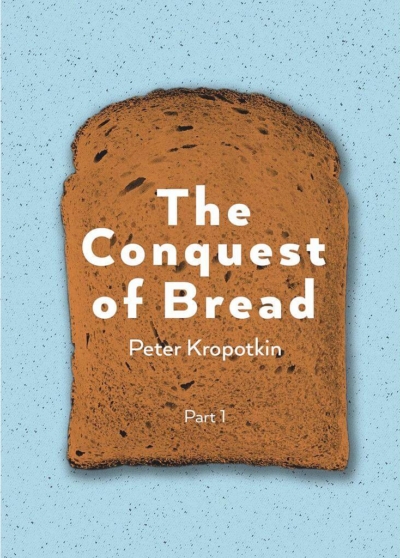
The Conquest of Bread – Peter Kropotkin
Originally serialised for publication in the french anarchist journal Le Revolte in the 1890s, and later translated for the Freedom paper in the UK, The Conquest of Bread is now regarded as a classic anarchist text. It has influenced generations, from the Spanish Civil War to the Occupy movement, Rojava, and beyond. We believe this seminal work should remain accessible and affordable, despite its inevitably “dated” style of writing.
Kropotkin analyzed the development of capitalism in industrial and agricultural production and proposed what he believed was necessary to end its associated suffering. While technology and society have changed dramatically since its publication, Kropotkin’s practical insights into production and distribution in a revolutionary society are as relevant today – amid our globalised, interdependent, and resource-depleted economic chaos – as they ever were.
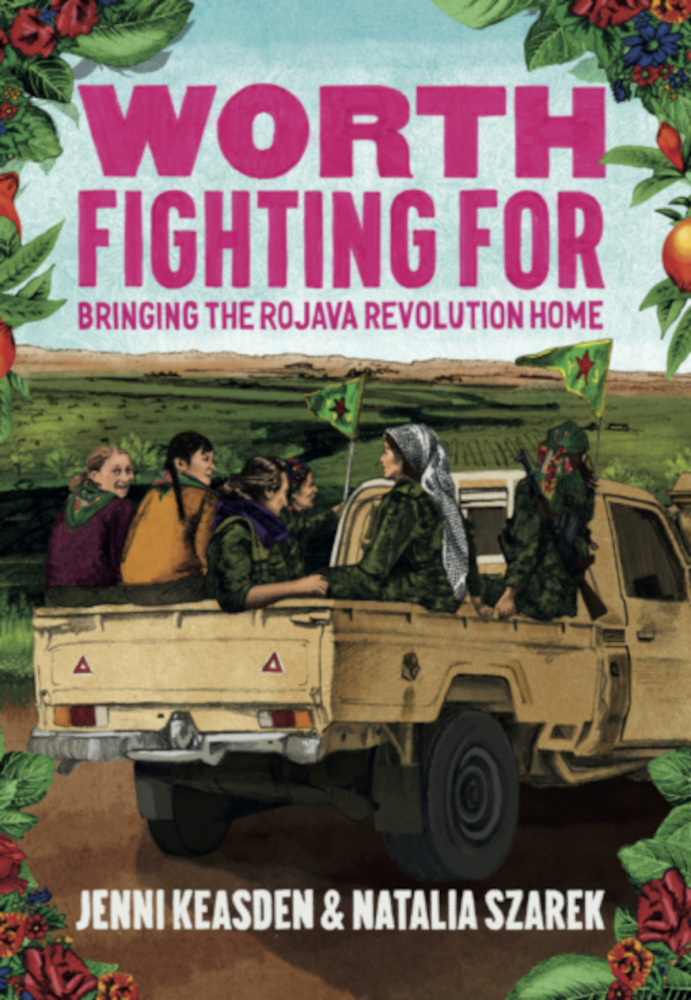
Worth fighting for: Bringing the Rojava revolution home – Jenni Keasden and Natalia Szarek
We wanted to bring (the Rojava) revolution home through stories of both the epic and the mundane, through day to day moments in all of their messiness and poetry. In a world where earnestness is looked down on, this book is where we give ourselves permission to fall in love with a revolution. This book is a product of shared moments with hundreds of comrades, of tales hundreds of years old, of the novels we read as children, of militant struggles old and new, and of an ongoing conversation that’s happening right now. We didn’t start it and we certainly aren’t trying to finish it. But the more people contribute the richer we can build the future. This is what we are committed to be a part of.
Warp and Weft : Psycho-emotional health, politics and experiences – Lisa Fannen

Warp & Weft gathers together ideas, radical frameworks and reference points to explore consciousness, and ways of understanding experiences of distress as they occur within our social and systemic contexts. It looks at what gets called ‘mental health’ and challenges the idea that our experiences of distress, struggle or variable consciousness are only ‘mental’. It challenges the way biomedicine splits mind from body and soul, and names that we are embodied beings, who are shaped by and unfold within the contexts we have inherited and live in. It looks at some of the history of psychiatry and examines the ways it has been, and continues to be used as a colonial force. It reframes trauma; it looks at the effects of trauma in the bodymindsoul, acknowledges the intersection of personal and collective trauma, and explores ways we might move towards healing.
Warp & Weft considers how we are given cultural ‘scripts’ for experience, and how we might relanguage experience on our own, and non-medical terms. Terms which address root causes of distress and point towards holistic approaches, in order to foster liberatory personal and collective transformation. More info from https://threadsbook.org/
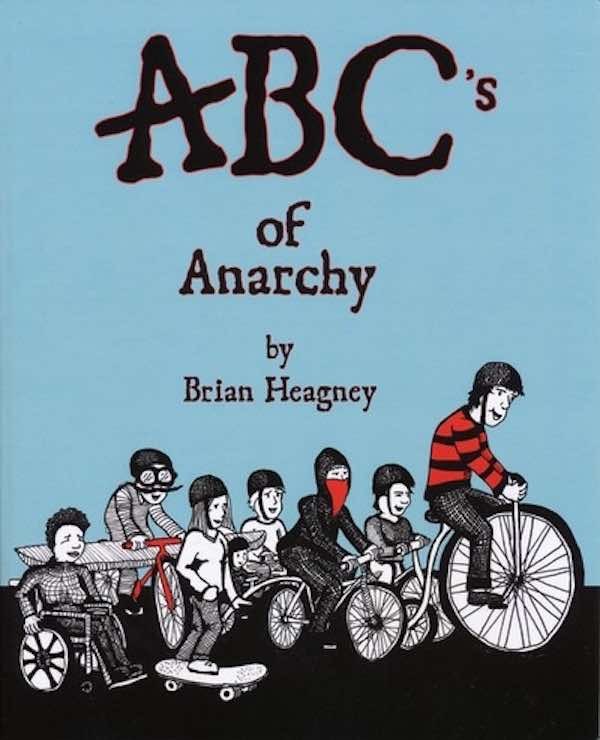
ABC’s of Anarchy – Brian Heagney
It’s Alphabetic Anarchy!
The only ABCs of anarchy book suitable for children of all ages. Infants will love the imagery, toddlers will thrive on learning the alphabet, and preschoolers will soak up the content while learning to read.
Every page includes insightful questions relevant for children or adults. Whether you merely want to go through the alphabet with your youngest, or have a thoughtful engaging discussion about life with your mother, this book is for you!
“Finally an abecedarius to smash alphabetical order,” says Agent Markatos of Crimethinc.
PM Press
Mutual Aid: An Illuminated Factor of Evolution – Peter Kropotkin
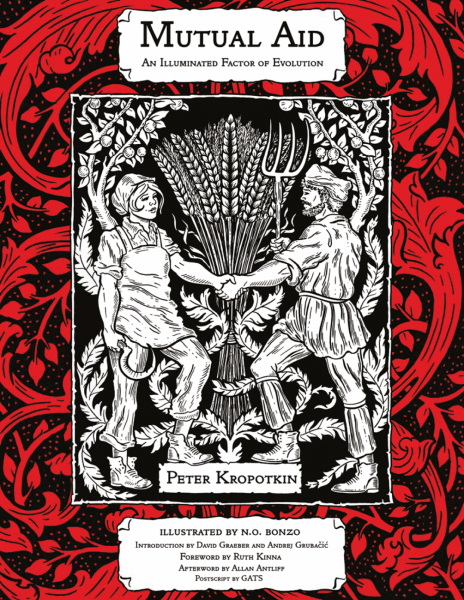
One hundred years after his death, Peter Kropotkin is still one of the most inspirational figures of the anarchist movement. It is often forgotten that Kropotkin was also a world-renowned geographer whose seminal critique of the hypothesis of competition promoted by Social Darwinism helped revolutionize modern evolutionary theory. An admirer of Darwin, he used his observations of life in Siberia as the basis for his 1902 collection of essays Mutual Aid: A Factor of Evolution. Kropotkin demonstrated that mutually beneficial cooperation and reciprocity—in both individuals and as a species—plays a far more important role in the animal kingdom and human societies than does individualized competitive struggle. Kropotkin carefully crafted his theory making the science accessible. His account of nature rejected Rousseau’s romantic depictions and ethical socialist ideas that cooperation was motivated by the notion of “universal love.” His understanding of the dynamics of social evolution shows us that the power of cooperation—whether it is bison defending themselves against a predator or workers unionizing against their boss. His message is clear: solidarity is strength!
Every page of this new edition of Mutual Aid has been beautifully illustrated by one of anarchism’s most celebrated current artists, N.O. Bonzo. The reader will also enjoy original artwork by GATS and insightful commentary by David Graeber, Ruth Kinna, Andrej Grubacic, and Allan Antliff.
Anarchy, Geography, Modernity: Selected Writings of Elisée Reclus
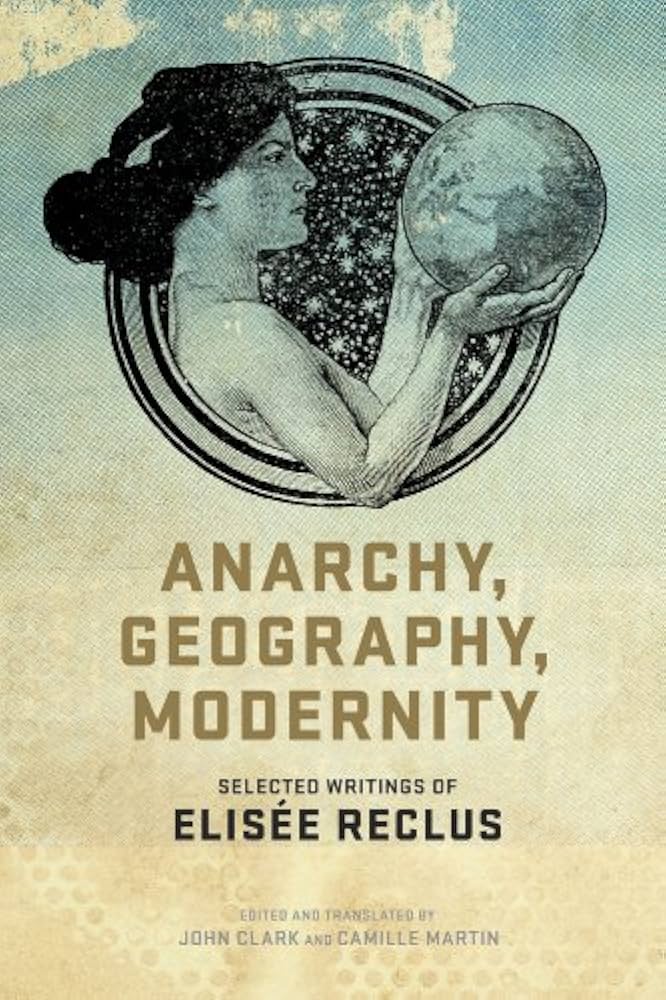
Anarchy, Geography, Modernity is the first comprehensive introduction to the thought of Elisée Reclus, the great anarchist geographer and political theorist. It shows him to be an extraordinary figure for his age. Not only an anarchist but also a radical feminist, anti-racist, ecologist, animal rights advocate, cultural radical, nudist, and vegetarian. Not only a major social thinker but also a dedicated revolutionary.
The work analyzes Reclus’ greatest achievement, a sweeping historical and theoretical synthesis recounting the story of the earth and humanity as an epochal struggle between freedom and domination. It presents his groundbreaking critique of all forms of domination: not only capitalism, the state, and authoritarian religion, but also patriarchy, racism, technological domination, and the domination of nature. His crucial insights on the interrelation between personal and small-group transformation, broader cultural change, and large-scale social organization are explored. Reclus’ ideas are presented both through detailed exposition and analysis, and in extensive translations of key texts, most appearing in English for the first time.
Working Class History: Everyday Acts of Resistance & Rebellion – Working Class History
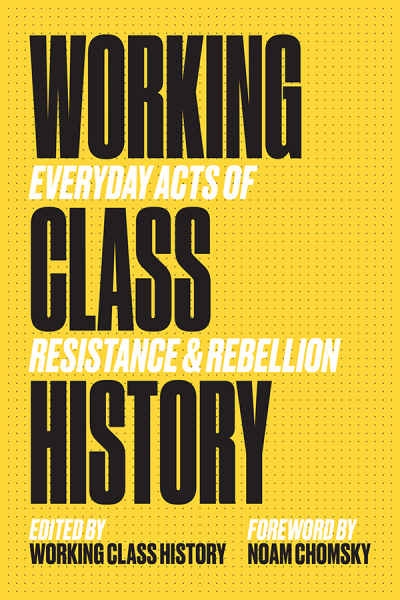
History is not made by kings, politicians, or a few rich individuals—it is made by all of us. From the temples of ancient Egypt to spacecraft orbiting Earth, workers and ordinary people everywhere have walked out, sat down, risen up, and fought back against exploitation, discrimination, colonization, and oppression. Working Class History presents a distinct selection of people’s history through hundreds of “on this day in history” anniversaries that are as diverse and international as the working class itself. Women, young people, people of color, workers, migrants, Indigenous people, LGBT+ people, disabled people, older people, the unemployed, home workers, and every other part of the working class have organized and taken action that has shaped our world, and improvements in living and working conditions have been won only by years of violent conflict and sacrifice. These everyday acts of resistance and rebellion highlight just some of those who have struggled for a better world and provide lessons and inspiration for those of us fighting in the present. Going day by day, this book paints a picture of how and why the world came to be as it is, how some have tried to change it, and the lengths to which the rich and powerful have gone to maintain and increase their wealth and influence.
Cycladic Press
Queerbetika – Michael Alexandratos

This handbook of grassroots movements, curated by the popular Working Class History project, features many hidden histories and untold stories, reinforced with inspiring images, further reading, and a foreword from legendary author and dissident Noam Chomsky.Queerbetika is a term used to describe the queering of the genre of rebetika – an urban Greek popular song from the late 19th century to the 1950s – through academic or creative interventions. This zine explores queerness and homosexuality in rebetika through its exponents, sites of performance, gay supporters and song lyrics. This is the first study and anthology in either Greek or English to investigate such an important but overlooked theme in the field of rebetology. Michael Alexandratos (b. 1997) is a writer, researcher and publisher based in Sydney, Australia. He runs a research blog dedicated to his music and recorded sound research, titled Amnesiac Archive, and has produced numerous album compilations of 78rpm recordings from Australia’s recorded sound history (1926-1957).